
A Window Isn’t Just a Window: How Modern Glazing Really Works
At AT-ECO, we spend a great deal of time in our showroom speaking with homeowners, architects, developers, and curious visitors at exhibitions. After thousands of conversations, a few questions appear again and again:
- Why are the frames so chunky?
- Do you offer slimline windows?
- Why do these windows look different in person compared to online?
- What actually makes one window better than another?
They are fair questions. Modern glazing may look simple — glass in a frame — but in reality it is a highly engineered part of your home’s thermal envelope. It plays a crucial role in airtightness, energy efficiency, comfort, acoustics, ventilation, safety, and long-term durability.
In this guide we bring everything together: the showroom questions, the physics behind window performance, manufacturing considerations, Passive House thinking, installation details, glass technology, and ventilation choices — all explained in practical terms for anyone choosing windows for a real project.

Showroom vs Reality: Why Frames Look “Chunky” on Display
One of the first misconceptions starts in the showroom itself. When you view a window on a stand, every millimetre of the frame is exposed. Nothing is hidden behind render, plasterboard, insulation, or cladding.
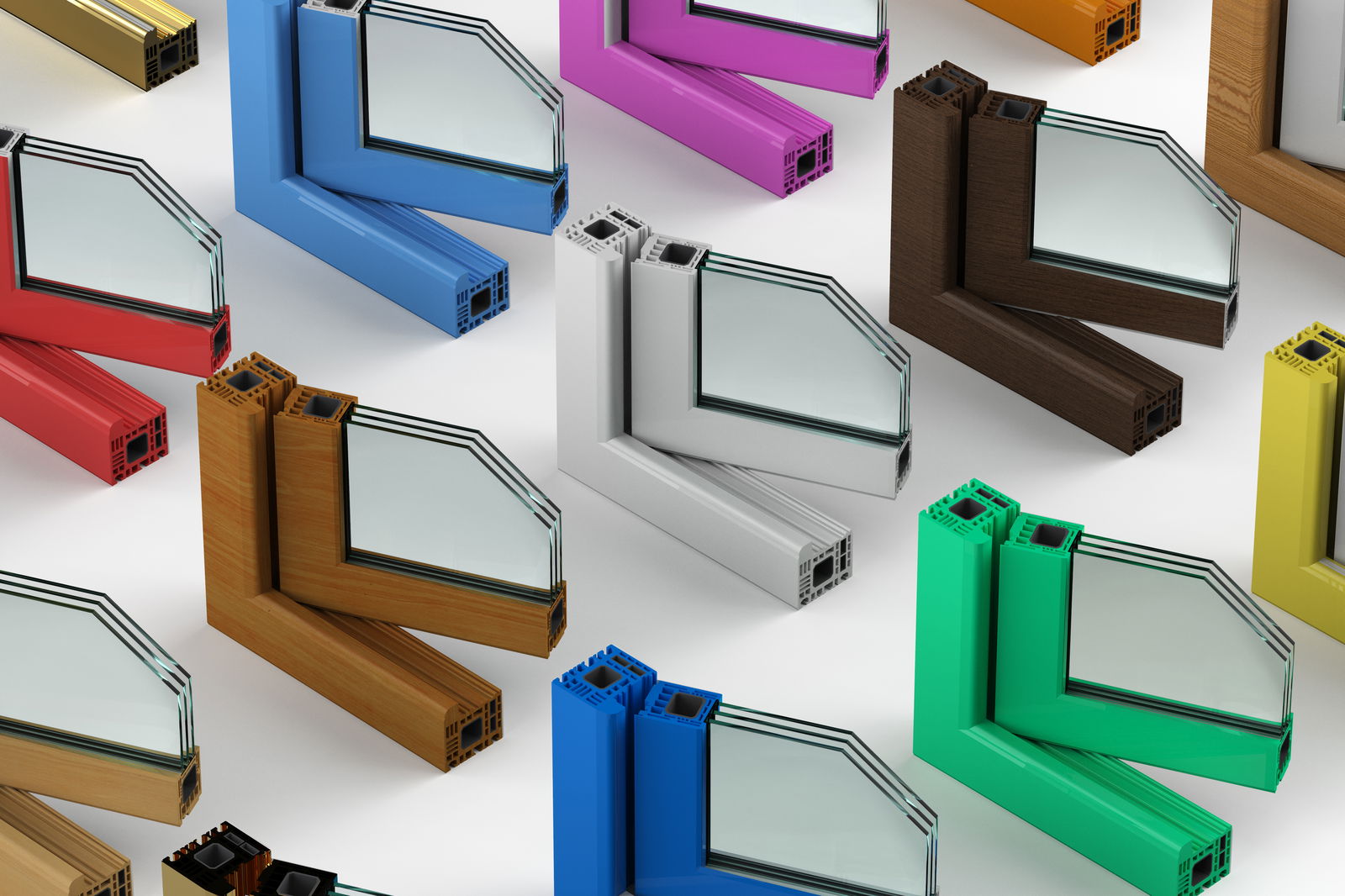
In a real home, especially new builds, a significant portion of the frame is designed to sit behind the façade build-up. In many installations, a frame that measures around 70 mm externally might only show around 30 mm of visible frame once the façade overlaps it. That visible section is usually the sash, while the structural parts of the frame sit behind insulation and finishing layers — exactly as the system is designed to perform.
The same principle applies internally. A window displayed on a board shows its full profile depth, but inside a completed home several elements cover parts of the frame:
- Plasterboard and skim finishes
- Tiles in bathrooms or kitchens
- Window reveals
- Internal trims and finishing details
This is also why extremely “ultra-slim” frames can create problems during installation. If the profile is too thin, it may not provide enough working area for critical construction details such as:
- Airtightness tapes and membranes
- Plastering and rendering edges
- Continuous insulation at the window junction
- Reliable sealing and weatherproofing
In other words, frame thickness is not simply about appearance. It is about engineering, buildability, and long-term performance.

Slimline Frames: Beautiful Until Physics Intervenes
Yes – we do offer slimline systems. A good example is Reynaers SL38, where the frame can be around 38 mm and the sash around 23 mm, creating a refined steel-style appearance when viewed in a showroom display.
However, when we work on real project designs with architects and builders, the story often changes. In many cases a slightly more robust profile — for example a 48 mm frame in a comparable slimline family — becomes the more suitable option. This is often necessary to:
- Carry the weight of triple glazing
- Withstand wind loading on larger openings
- Allow proper sealing and gasket compression
- Provide a dependable surface for airtight membrane attachment
- Maintain alignment and long-term structural reliability
This is why we encourage homeowners not to choose windows purely from photos of ultra-slim profiles. A window should be selected based on comfort, performance, and practical buildability — not only what looks minimal on a brochure.
One useful way to think about this is comfort near the window itself. Internal comfort is strongly influenced by the surface temperature of the inner glass pane. If the glass stays relatively warm, you avoid the cold “radiating” sensation and the downward air movement that often makes rooms feel draughty near glazing.
This is one reason why high-performance window discussions often target values around Uw ≈ 0.8 W/m²K or better in low-energy buildings. Warmer internal surfaces generally translate into noticeably better comfort.

The Hidden Engineering Inside “Minimalist” Sliding Doors
Many ultra-slim sliding doors appear to have almost no frame at all. Systems marketed as “minimal” can look razor-thin in brochures, giving the impression that the glass is floating inside the opening. In reality, what you see is only the visible portion of the system.
Behind the scenes there is often 100 mm or more of concealed structural profile integrated into the wall build-up. Much of the frame is intentionally hidden within the façade, floor build-up, and surrounding construction layers.
The reason is simple: weight. A large triple-glazed sliding leaf can weigh several hundred kilograms. Supporting that load reliably requires serious engineering. Deeper reinforced profiles, high-load carriage systems, precision rollers, and robust tracks are all required to ensure smooth movement and long-term reliability.
In other words, the minimalist appearance usually depends on more structural engineering, not less. The structure is simply designed to be hidden so that the final visual result feels clean, light, and architectural.

Triple Glazing: Why Weight Matters — And Why the Industry Has Shifted Toward It
For decades, double glazing was considered the standard. However, modern building standards, comfort expectations, and the growth of low-energy design have gradually pushed the industry forward.
Today, triple glazing is increasingly common because it:
- Improves insulation significantly
- Keeps the inner pane warmer, which is important for indoor comfort
- Reduces cold downdrafts caused by convection near glazing
- Improves acoustic performance depending on the glass build-up
- Allows more intelligent management of solar gain through specialised coatings
One detail many people don’t realise is that the middle pane is often simple float glass. Despite being relatively inexpensive, it plays an important role: it separates the inner and outer surfaces, stabilises temperatures within the glazing unit, and significantly reduces heat loss.
Manufacturers have also adapted their production around this shift. As more window systems are engineered for deeper glazing units and insulated frames, triple glazing increasingly becomes the standard configuration — while double glazing is starting to feel more like a special order.

Why Windows Matter More Than Walls in a High-Performance Home
Modern wall systems can perform exceptionally well. Construction methods such as SIPs, ICF, and high-performance insulated panels can achieve very low levels of heat loss through the wall structure itself.
However, the moment an opening is introduced into that wall, new challenges appear. Windows can become a source of:
- Heat loss
- Overheating from solar gain
- Thermal bridging at the junction
- Condensation risk
- Airtightness weak points
This is why windows play such a critical role in low-energy building design. In modern building physics, windows are treated as thermal components of the building envelope, not simply decorative features.
Window performance depends on several elements working together:
- Glazing performance (Ug value)
- Frame performance (Uf value)
- Spacer and edge insulation performance
- The installation interface — the frame-to-wall junction
If the window itself underperforms — or if the installation detail is poorly designed — the performance of the entire wall system can be compromised.

Glass Build-Up: Safety Glazing, Laminated Glass, and “Like-for-Like” Quotes
This is an area where quotes can easily become misleading. In the UK, safety glazing is required in certain “critical locations” — areas where people may fall or walk into glass. Depending on the application, safety glazing can be achieved using toughened glass or laminated glass.
Laminated glass is frequently selected because it offers several advantages:
- It remains intact even when cracked because the interlayer holds the fragments together
- Improves security, as it is harder to breach cleanly
- Reduces the risk of injury if breakage occurs
- Can improve acoustic performance when used in the correct glazing build-up
Problems often arise when two quotes appear similar at first glance. One supplier may price a basic glazing configuration, while another includes a more appropriate specification with laminated glass in the correct safety locations.
The safest approach is simple: always request the full glazing specification in writing, including where safety glass is used and whether it is specified as toughened or laminated. This ensures you are comparing quotations on a true like-for-like basis.

g-Value, Light Transmission & Reflectance: More Than Just Numbers
Every piece of glass interacts with sunlight. One of the key values used to describe this is the g-value (solar factor), which measures how much solar energy passes through the glazing.
A commonly balanced solar factor sits around 0.50–0.55, meaning roughly half of the sun’s energy can enter the room. In many situations this provides a good balance between daylight, passive warmth, and visual comfort without making the glass noticeably dark.
When the solar factor drops to around 0.40 or lower, certain trade-offs can begin to appear:
- The glass may appear visibly darker
- External reflectance often increases
- The façade can start to look more mirror-like
- Glare may become an issue inside the room or for neighbouring properties
In more extreme situations, highly reflective glazing exposed to strong sunlight can create uncomfortable glare or small localised hot spots. These situations are uncommon but illustrate why solar control coatings should be chosen carefully rather than automatically maximised.
Selecting the right solar performance depends on several design factors:
- Orientation of the façade (north, south, east, or west)
- Shading elements such as overhangs or external blinds
- Window size and how the room is used
- Wall construction and available thermal mass
- The building’s ventilation strategy, especially during summer
In practice, solar control works best when it is balanced — not automatically pushed to the highest or lowest possible value.

Thermal Stress & Nickel Sulphide: Rare, But Important to Understand
With large panes of glass — particularly on south-facing elevations — thermal stress can occur when one part of the glass heats faster than another. Situations such as partial shading, deep window reveals, or colder edges around the frame can create uneven temperature gradients across the glass surface.
Nickel sulphide inclusions are a separate and relatively rare phenomenon linked to the manufacturing process of toughened glass. In certain circumstances, microscopic nickel sulphide particles trapped inside the glass can expand over time and contribute to spontaneous breakage.
While these events are uncommon, they are recognised within the glazing industry. The risk can be significantly reduced through careful design and specification, including:
- Correct glass specification for the size and orientation of the opening
- Appropriate edge clearances within the frame
- Sensible shading strategies to avoid uneven heating
- Proper installation detailing
- In some projects, additional manufacturing controls where appropriate
Large, visually striking glass panels require proper engineering. Beautiful glazing should always be carefully designed — never improvised.

Why Steel-Style Windows in Public Buildings Don’t Feel the Same at Home
Many people fall in love with slim, steel-style glazing they see in cafés, restaurants, converted warehouses, galleries, and boutique commercial spaces. These interiors often look incredible, and it’s easy to assume the same systems will behave exactly the same way in a home.
In reality, the environments are very different. Commercial buildings often rely on strong mechanical ventilation, heating, and cooling systems that continuously move air around the space. This airflow can mask the sensation of cold surfaces and downdrafts near large areas of glazing.
Homes are more sensitive environments. People are often:
- Barefoot or wearing thin socks
- Sitting still near windows
- Dressed lightly indoors
- Expecting quiet, stable comfort without noticeable mechanical airflow
In a domestic setting, the physics becomes noticeable. Warm air rises inside the room, reaches the cooler surface of the glass, cools down, and begins to fall. This creates a gentle circulation loop that can feel like a draught — even when the window itself is perfectly airtight.
High-performance glazing significantly reduces this effect because the inner surface of the glass stays warmer. That is why steel-style aesthetics should be paired with strong thermal performance if indoor comfort is important.

Drafts Aren’t Always Leaks — Sometimes It’s Physics
Older windows often feel draughty even when they are fully closed. In many cases, this sensation is not caused by a gap in the frame or seal — it is the result of air convection occurring near the glass surface.
Warm air inside the room rises and meets the colder surface of the window glass. As the air cools, it becomes denser and begins to fall back down toward the floor. This movement creates a circulation loop that can feel like a draft around your legs and feet.
Modern triple glazing helps reduce this effect because the inner pane remains significantly warmer. With a warmer glass surface, the temperature difference is smaller, which weakens the convection loop and improves overall comfort.
This is one reason why replacing older glazing can feel dramatically more comfortable — even if the previous windows appeared to close and seal properly.

The Trickle Vent Problem — And Why MVHR Is Often Superior
Window manufacturers invest heavily in making frames airtight, insulated, and acoustically effective. A trickle vent is, by definition, an opening cut into that system.
In practice, trickle vents can introduce several compromises:
- Cold air entering at the coldest part of the room (near the window)
- Reduced sound insulation
- Lower overall airtightness performance
- Local cooling of the glass and frame
- A renewed perception of “drafts” even with a high-quality window
From a building physics perspective, the window head is rarely the most effective place to introduce fresh air into a room.
MVHR (Mechanical Ventilation with Heat Recovery) offers a different approach by managing air movement throughout the entire building. A properly designed MVHR system can:
- Provide filtered fresh air throughout the home
- Recover heat from outgoing air
- Maintain stable indoor temperatures
- Help control humidity and reduce condensation risk
- Support healthier indoor air quality
- Work naturally with airtight, low-energy building design
It is important to note that ventilation strategies must still comply with Building Regulations and the specific design of each property. The key point is not that trickle vents should never be used, but that whole-house ventilation design should be considered early in a project rather than added as an afterthought.

Energy Costs & Heating Demand: Why High-Performance Windows Save Money
High-performance glazing is not only about comfort — it can also influence the long-term running costs of a home.
In real-world energy modelling, heating demand is often affected as much by construction details as by the headline window performance values. Important factors include:
- Airtightness performance
- Spacer choice and edge heat losses
- Thermal bridging at junctions
- The quality of the installation method
These elements can be just as important as the quoted Uw-value. Two windows with similar performance ratings can behave very differently once installed if the surrounding junction detailing or airtightness execution is poor.
In practical terms, correct placement of the window within the insulation layer and careful airtight installation can significantly improve the overall thermal performance of the wall opening.
In poorly detailed installations, heat loss at the junction can increase dramatically — sometimes approaching double the loss of a properly engineered installation. That is why energy savings from high-performance glazing are not only theoretical; they translate directly into better comfort and lower heating bills.

Installation: The Silent Decider of Whether a Window Performs
Even the highest-quality window can underperform if the installation is poor. In real projects, the problems we encounter most often include:
- Incorrect expansion gaps around the frame
- Missing airtight tapes or membranes
- Foam used incorrectly as structural support
- Misaligned frames causing poor gasket compression
- Thermal bridging due to incorrect placement within the wall build-up
- Weak or incomplete perimeter sealing
- Poor moisture-managed detailing
A properly executed installation is much more deliberate and typically includes:
- Correct structural anchors with appropriate packers or shims
- Continuous airtight tapes or membranes on the internal side
- External weatherproofing and moisture-managed detailing (often using EPDM systems)
- Continuous insulation around the window perimeter
- Carefully calibrated alignment so sashes compress seals correctly
Installation should never be treated as a finishing step. It is a critical performance component of the window system.

In Summary: A Window Is Not Just a Window
A modern window is far more than glass in a frame. In a well-designed building, it becomes a critical component of the entire performance system.
A window today acts as:
- A thermal insulation system
- Part of your airtightness strategy
- A regulator of indoor comfort
- A barrier against external noise
- An energy-saving element
- A manager of solar gain and daylight
- A safety feature
- A structural component of the façade
- An architectural design element
Choosing glazing based only on how slim a frame appears rarely delivers the long-term performance, comfort, and durability that modern homes require.
At AT-ECO, we help clients understand not only how a window looks, but how it performs within the building envelope — and which choices will still feel right ten or twenty years from now.
A window is not just a window. It is one of the most important performance components in the entire building.